




The Ultimate Guide to Hiring Elite Audio-Visual Technicians in Bristol BS1
Find, Vet, and Secure Top-Tier AV Talent for Your Events, Productions, and Installations.
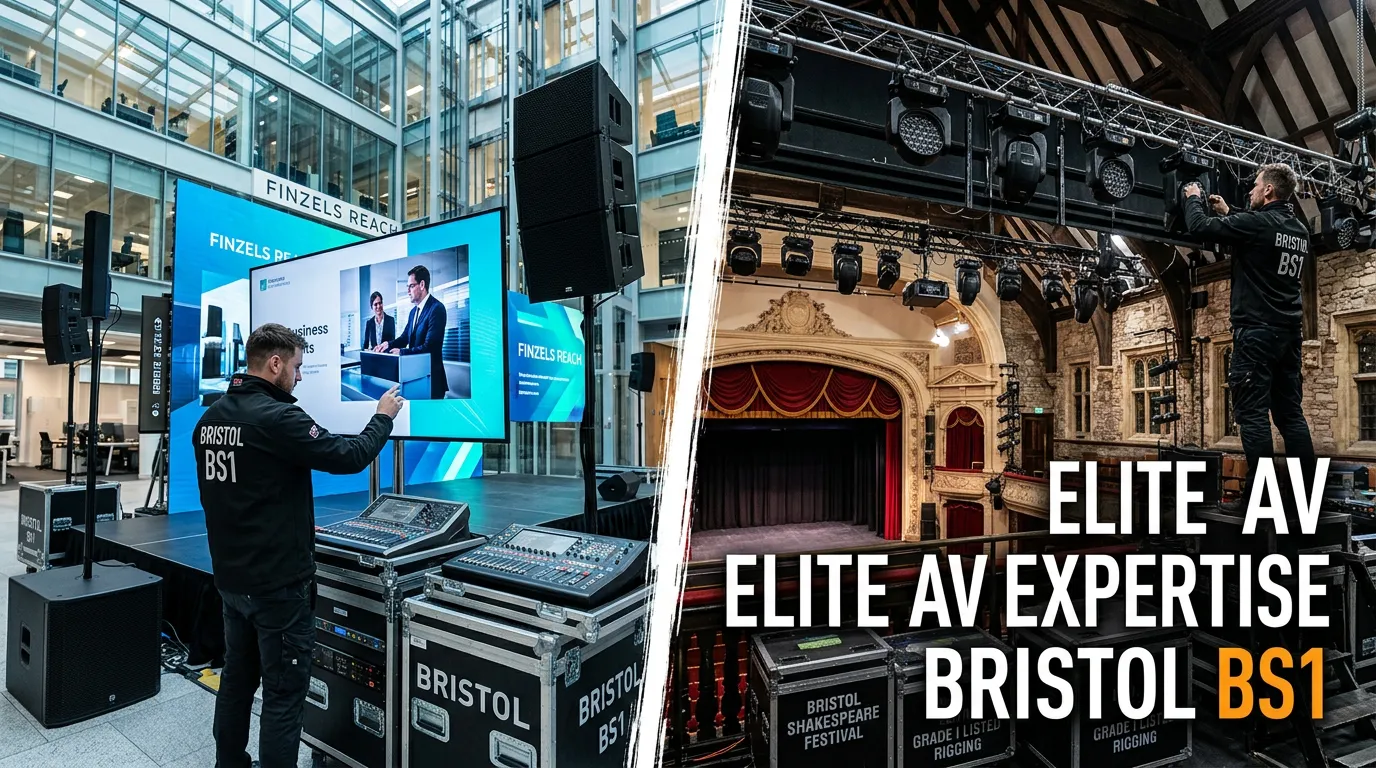
Why Bristol BS1 Demands Elite AV Expertise
Bristol’s BS1 postcode is the pulsating heart of the city’s commercial and cultural scene. From the historic harbourside to the modern developments of Finzels Reach, this area hosts a unique blend of high-stakes corporate events, cutting-edge theatre productions at venues like The Bristol Old Vic, and large-scale conferences at Bristol Marriott Hotel City Centre. The AV requirements here are diverse and unforgiving.
An elite AV technician in this zone doesn't just understand equipment; they comprehend the acoustic challenges of converting a warehouse space for a product launch, the logistical complexities of rigging in a Grade I listed building, and the pressure of live streaming a shareholder meeting for a global financial firm based in Queen Square. They are problem-solvers who anticipate issues like Wi-Fi blackspots in old stone buildings or power draw limitations in temporary event structures.
The Core Competencies of a BS1 Elite AV Technician
1. Technical Mastery & Hybrid Systems
Beyond basic operation, elite technicians are fluent in the integration of disparate systems. They can make a Q-SYS core talk to a Dante audio network, while ensuring the LED wall content is perfectly synced via SMPTE timecode. They understand network protocols, audio vector analysis, and the principles of video scaling and latency.
Key Software/Firmware: They are proficient with industry-standard tools like Crestron Toolbox, Biamp TesiraFORTÉ, QSC Q-SYS Designer, and video switcher control software (e.g., for Blackmagic, Roland, or Christie).
2. Creative Problem-Solving Under Pressure
A microphone fails during a CEO's keynote. A critical video playback file is corrupted. An unexpected sunrise through a skylight washes out a projection screen. Elite technicians treat these not as disasters, but as puzzles to be solved in real-time.
Case Study Example: During a major tech launch at The Watershed, a primary media server overheated. The on-site lead technician quickly re-routed signal paths through a backup device, used a laptop with a pre-loaded lower-resolution version of the content to maintain the show, and had a fan-and-ice pack cooling solution in place within minutes, all without the presenter or audience noticing a significant drop in quality.
3. Impeccable Client & Crew Liaison
In BS1, clients range from anxious wedding planners to demanding Fortune 500 production managers. Elite technicians communicate clearly, manage expectations, and translate technical jargon into understandable benefits. They also lead freelance crews effectively, delegating tasks and fostering a collaborative environment on-site.
This includes creating clear, concise technical riders, providing accurate load-in/out schedules that respect venue constraints, and offering post-event reports that detail system performance and any incidents.
A Step-by-Step Guide to Vetting & Hiring
Phase 1: The Strategic Brief
Before you even look at a CV, define your needs with precision. Are you hiring for a one-off gala dinner at the Bristol Aquarium, a permanent installation in a new BS1 office complex, or a long-term production technician for a series of concerts? Create a brief that details:
- Technical Scope: Audio (PA, mics, mixing), Video (projection, LED, switching), Lighting (conventional, moving, control), Control Systems, Streaming.
- Venue Specifics: Floor plans, power access, rigging points, noise ordinance limits.
- Soft Skills Required: Client-facing, team leadership, stress tolerance.
- Budget Range: Day rates for freelancers or salary bands for permanent hires.
Phase 2: Sourcing Candidates
Go beyond generic job boards:
- Industry-Specific Agencies: Utilize specialist AV recruitment firms that understand the difference between a broadcast engineer and a live event technician.
- Bristol's Creative Network: Tap into venues like Bristol Beacon, The Old Vic, and production houses. Word-of-mouth is powerful in BS1.
- Professional Bodies: The Chartered Institute of Ergonomics & Human Factors (CIEHF) or the Association of Loudspeaker Manufacturing & Acoustics International (ALMA) can be sources.
- Social Media & Forums: LinkedIn groups for AV professionals, and even specific subreddits, can yield highly qualified, passive candidates.
Phase 3: The Technical Assessment
Resumes list tools; assessments prove skill. Move beyond"Tell me about a time..." questions.
Practical Tasks:
- Provide a venue diagram and an equipment list. Ask them to draft a signal flow diagram for a hybrid presentation with a keynote speaker, video playback, and live remote panelists.
- Present a real-world problem scenario:"You have persistent hum on a DI line. Walk me through your diagnostic process."
- For install roles, ask them to review a system schematic and identify two potential points of failure or inefficiency.
Portfolio Review: Examine photos/videos of past events they’ve worked on. Look for cable management, neatness of rack builds, and overall professionalism of the setup.
Phase 4: The In-Person or Virtual Interview
This is about cultural fit and critical thinking. Involve the people who will work alongside them—your lead audio engineer, project manager, etc.
Key Questions to Ask:
- "Describe your pre-event checklist. What are the three most critical items you verify that others might overlook?"
- "How do you approach training a non-technical client on using a new room control system?"
- "A client asks for a change 30 minutes before doors open that will push the system beyond its safe operating limits. How do you handle this?"
- "What's one piece of AV technology you're currently excited about, and how could it be applied in a BS1 venue like We The Curious?"
Reference Checks: Contact not just the provided references, but use your network to find unsolicited feedback from venue managers or production coordinators in Bristol who may have worked with them.
Case Study: The Multi-Format Business Conference
Hiring for a complex, two-day event at Paintworks Bristol.
The Challenge:
A financial services firm required a conference for 400 attendees with three concurrent session formats: a main stage with live interpretation, interactive breakout rooms with voting technology, and a live-streamed"studio" for remote attendees. The event also required seamless switching between presenters, pre-recorded videos, and remote guest interviews. All content needed to be recorded and repurposed.
The Hiring & Solution:
The client hired a Technical Project Manager (a permanent elite technician) who then built a team of three specialist freelancers:
- An Audio Lead: Expert in Dante networking to handle the 64-channel audio matrix between rooms, RF coordination for 20+ wireless mics, and the live interpretation feed.
- A Video Engineer: Specialized in ATEM switchers, NDI workflows for the breakout rooms, and live streaming via Wirecast to a custom platform with low latency.
- A Lighting & Broadcast Technician: Responsible for the"studio" look and ensuring broadcast-safe lighting levels for the remote guests and recording.
The Project Manager created a unified technical timeline, acted as the single point of contact for the client, and implemented a redundant system where any single piece of hardware failure would not stop the show. The event ran flawlessly, and the recorded assets were delivered within 24 hours.
The Takeaway:
For large, complex events, consider hiring a lead technician or project manager first. Their expertise allows them to identify and recruit the perfect supporting team, ensuring a cohesive and reliable technical delivery.
Permanent vs. Freelance: Making the Right Choice for Your BS1 Needs
| Consideration | Permanent Hire | Freelance Hire |
|---|---|---|
| Best For | Ongoing operations (corporate HQ, university, permanent venue), asset management, long-term system development. | One-off events, seasonal peaks, specific projects requiring niche expertise (e.g., large-scale projection mapping). |
| Cost Structure | Salary, benefits, training, equipment. Higher fixed cost, but lower per-event cost over time. | Day rate + expenses. No long-term commitment. Pay only for the time you need. |
| Knowledge & Continuity | Deep, institutional knowledge of your specific systems and workflows. Provides consistency. | Brings fresh, cross-industry experience and exposure to the latest technologies from various projects. |
| Management Overhead | Requires HR management, career development, and integration into company culture. | Simpler contractor relationship. Managed via scope of work and contracts. |
| Scalability | Limited by headcount. May require overtime or temporary help for large projects. | Highly scalable. Can build a large team quickly for a major event by tapping into freelance networks. |
Navigating Contracts & Rates in the Bristol Market
Understanding the market rate ensures you attract quality talent without overpaying. Rates in BS1 are typically higher than the national average due to the concentration of high-profile work and technical demands.
Freelance Day Rates (Guide)
- Junior Technician/Runner: £150 - £220/day. Handles basic setup, cable running, and pack-down under supervision.
- Competent Technician: £250 - £350/day. Can operate specific systems (e.g., basic audio mix, vision switch) independently.
- Specialist/Senior Technician: £400 - £600/day. High-level expertise in a specific discipline (e.g., broadcast audio engineering, complex lighting programming, network design).
- Technical Project Manager/Director: £500 - £800+/day. Responsible for overall technical delivery, client liaison, design, and team management.
Note: These rates are for labour only and do not include equipment hire.
Contract Essentials
Whether freelance or permanent, a clear contract protects both parties. Key clauses for freelance agreements include:
- Scope of Work: A detailed description of deliverables, dates, times, and location.
- Payment Terms: Deposit schedule, final payment deadline, and expenses policy.
- Cancellation Policy: Agreed fees for late-notice cancellation (e.g., 50% fee if cancelled within 7 days).
- Intellectual Property: Clarifies who owns system designs, show files, or custom programming created for the event.
- Insurance: Proof of Public Liability and Professional Indemnity insurance (minimum £5m cover is standard for BS1 events).
- Confidentiality: Critical for corporate and private events in the competitive BS1 environment.
Investing in Your AV Team: Retention & Development
Hiring elite talent is only the first step. Retaining them in the competitive Bristol market requires a strategic approach.
Continuous Professional Development (CPD)
Technology evolves rapidly. Supporting your team's growth is a direct investment in your capability.
- Manufacturer Training: Fund certifications from key brands like Shure, Dante, Crestron, or Adobe.
- Conference Attendance: Support attendance at trade shows like ISE (Integrated Systems Europe) or PLASA Focus Leeds.
- Soft Skills Training: Offer courses in project management (e.g., PRINCE2 Agile), client communication, or first aid.
This not only improves their skills but dramatically boosts job satisfaction and loyalty.
Creating a Career Pathway
Elite technicians are driven by challenge. Show them a future within your organization.
- Clear Progression: Define roles from Technician > Senior Technician > Lead > Technical Manager > Head of Department.
- Diverse Projects: Actively seek out different types of work—corporate, creative, installation—to keep their work engaging.
- Empowerment: Give them ownership over specific systems or processes. Allow them to propose and manage upgrades.
- Competitive Compensation: Regularly review salaries and benefits against the BS1 market. Include performance-linked bonuses.
Conclusion: Building Your Bristol BS1 AV Legacy
Securing elite audio-visual technicians in Bristol's BS1 district is a deliberate investment in the quality, reliability, and impact of your events and installations. It transcends simply filling a role; it's about forging a partnership with technical artists who understand the unique pressures and opportunities of this vibrant postcode.
By following the strategic hiring, vetting, and retention practices outlined in this guide, you move from a reactive consumer of AV services to a proactive curator of technical excellence. You build a team—whether in-house or a trusted freelance roster—that becomes a competitive advantage.
The right technician doesn't just execute a brief; they enhance it. They spot the potential for a more immersive audience experience at M Shed, devise a more robust streaming solution for your hybrid conference, and protect your reputation by ensuring every cue, every light, and every word is delivered with flawless precision. In the dynamic landscape of Bristol BS1, that level of assurance is not a luxury; it's the foundation of memorable and successful events.
Your next step? Define your precise need, craft your technical brief with the detail an elite professional would respect, and begin your search with the confidence that you now know exactly what to look for—and how to secure it.